

Blog Hotels
Hotel phone systems: what the front desk actually needs
PMS integration, wake-up calls, the 911 rules every property has to meet, and where an AI agent fits on the line that fills rooms.
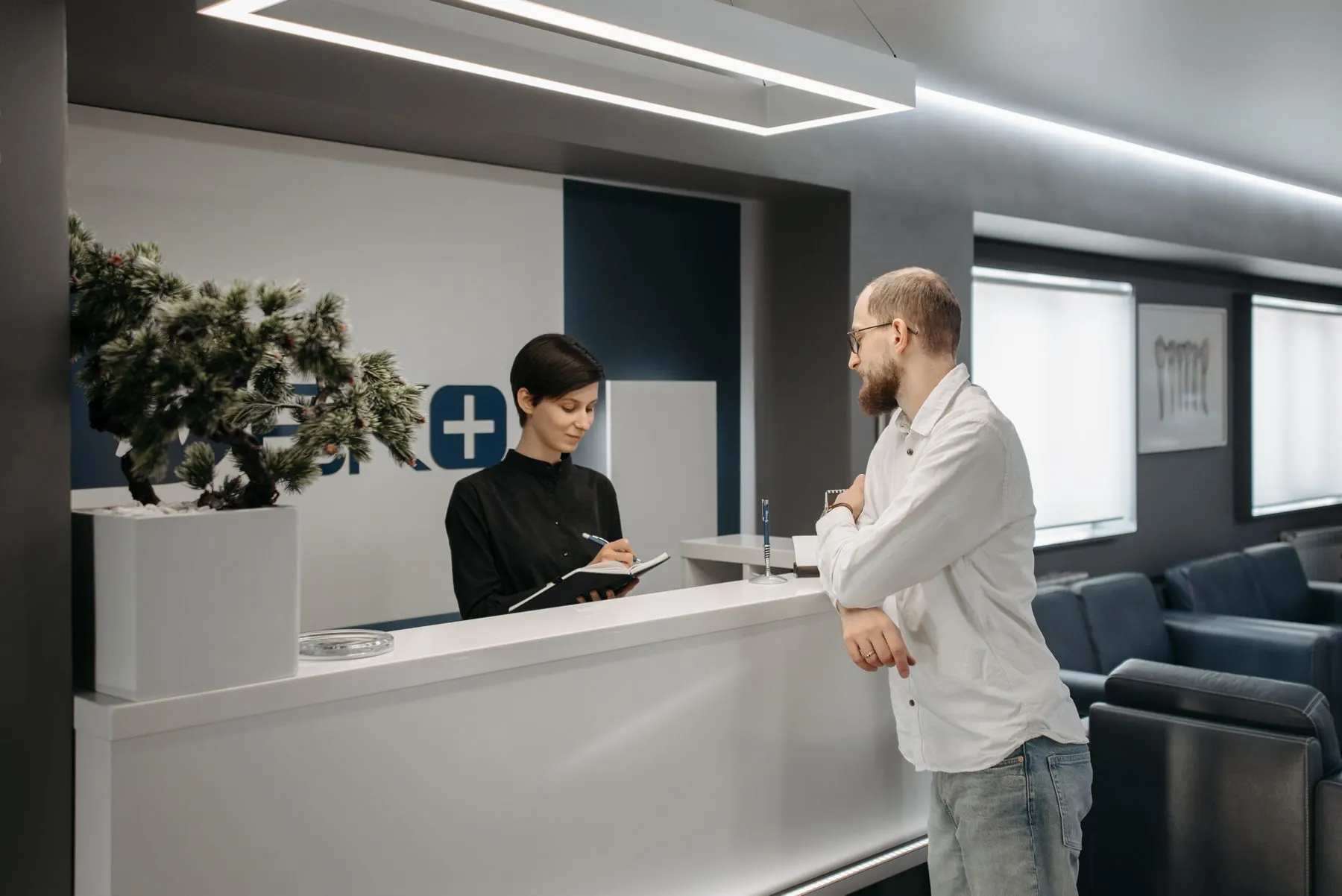
A hotel phone system does three jobs at once. It connects guest rooms to the front desk and the outside world. It keeps the property on the right side of federal 911 rules. And it carries the calls that fill rooms: reservations, rate questions and the late arrival who wants to know if anyone is still at the desk. Most buying guides stop at the first job. The third is the one that shows up in revenue.
What a hotel phone system is
In regulatory terms a hotel phone system is a multi-line telephone system, or MLTS: one system serving many extensions, usually guest rooms, the front desk, housekeeping, maintenance and the back office. Older properties run a PBX in a closet. Newer ones increasingly run a hosted or cloud system, where the switching happens in a data center and the property keeps only the handsets and the network.
Either can work. The choice usually comes down to what your property management system (PMS) supports, what handsets you already own, and who will maintain the thing at 2 AM.
The features that matter
PMS integration
This is what turns a phone system into a hotel phone system. When a guest checks in, the room phone should be enabled and show their name to the front desk. When they check out, outside dialing should shut off and any charges should post to the folio. Housekeeping codes dialed from the room phone should update room status in the PMS. Ask every vendor which PMS they integrate with, by name and version, and whether the integration works both ways.
Wake-up calls
Automated wake-up calls sound trivial until one fails. Guests and staff should both be able to set them, the system should retry when nobody answers, and the desk should get an alert after repeated misses.
Voicemail per stay
Each stay needs a clean mailbox that's wiped at checkout, so the next guest never hears the last guest's messages.
Call accounting
If you still charge for outside or long-distance calls, the system has to price them and post them to the guest's bill. Many properties now make local and domestic calls free, which makes this simpler.
Staying up
Ask what happens when the internet drops and when the power goes out. A room phone is a safety device, not just a convenience, so the answer matters more than any feature list.
The 911 rules every hotel has to meet
Two federal laws apply directly to hotel phone systems, and the FCC has written rules for both.
Kari's Law is named for Kari Hunt, who was killed in a motel room in Marshall, Texas in 2013. Her nine-year-old daughter tried to call 911 four times, but the motel's phones needed a 9 dialed first for an outside line, and the calls never went through. Under Kari's Law and the FCC's rules, a multi-line system installed or first sold after February 16, 2020 must let anyone dial 911 directly, with no prefix. It must also notify a central point, such as the front desk or security, when someone dials 911, somewhere a person is likely to see or hear it. That notice should say a 911 call was made and include a callback number and location information where that's technically feasible.
RAY BAUM'S Act, Section 506, requires the system to send a "dispatchable location" with a 911 call: the validated street address plus details like the room or floor that responders need to find the caller. For fixed phones on the premises of covered systems, the FCC's compliance date was January 6, 2021.
Systems installed before February 16, 2020 are generally exempt, but a replacement or new install is covered, so any system you buy now should meet both. The FCC's page on MLTS 911 requirements has the full rules. Confirm your specific obligations with your installer.
The line that fills rooms
Everything above is about the phone in the room. The call that matters most commercially comes in on the outside line: a guest comparing three hotels, a family planning a weekend, a traveler whose flight just landed late. Those calls tend to arrive at the worst moment, in the middle of the check-in rush, when the person at the desk is looking at the guest in front of them.
A phone system routes that call. It doesn't answer it. Hunt groups and a ring-over to the back office help, but at 4 PM on a Friday every extension is busy and the call rings out or lands in voicemail. A guest comparing hotels rarely leaves a message. They call the next one.
Where an AI agent fits
An AI phone agent doesn't replace your hotel phone system, and it should never touch room-to-room calls or 911. It sits on the outside line, the reservations and general inquiry number, and answers every call that comes in, at the same time.
A well-built one checks live availability and rates in your PMS, reads the reservation back to the guest (dates, room type, rate and name), and waits for a yes before anything is held. It passes group bookings, refunds and complaints to a person. It should never take a card number over the phone. That's how Pulse works for hotels, and you can see how it handles a booking call.
The practical result is that the front desk stops choosing between the guest in front of them and the guest on the phone.
A checklist for choosing a hotel phone system
- Which PMS does it integrate with, and does the integration work both ways?
- Does it support direct 911 dialing and front-desk notification out of the box?
- Does it send a dispatchable location, including the room number, with 911 calls?
- What happens during an internet or power outage?
- Can the outside line go to an AI agent or answering service when the desk is busy, and come back when it isn't?
- Can you keep your existing phone numbers?
- Who supports it at 2 AM, and how fast do they respond?
Questions people ask
What is a hotel phone system called?
A multi-line telephone system, or MLTS. It is usually an on-site PBX or a hosted cloud system with hospitality features such as PMS integration, wake-up calls and per-stay voicemail.
What does Kari's Law require of hotels?
For systems installed or first sold after February 16, 2020, guests must be able to dial 911 directly with no prefix, and the system must notify a central point such as the front desk when 911 is dialed.
Do hotels still need phones in the rooms?
Many guests use their own phones, but a room phone is still the simplest way to reach the desk, and under RAY BAUM'S Act a 911 call from it should carry the room location to responders.
Can an AI answer my hotel's reservation line?
Yes, if it can read live availability from your PMS and write bookings back. Without that it can only take messages. It should never take card numbers over the phone.
Regulatory details are summarized from the FCC's MLTS 911 requirements page, checked on September 29, 2026. This article is general information, not legal advice.